It was a colossal hit on MTV; however, Romeo Void’s “A Girl in Trouble (Is a Temporary Thing) did not score too high on the Top 40 charts only peaking at 35. This 1984 single was Romeo Void’s one-hit wonder. This San Francisco band featured Debora Iyall on lead vocals. Ms. Iyall is a member of the Cowlitz Native American tribe. The great saxophone work was provided by Benjamin Bossi.
I swear this song also has a melodica in the mix – it might just be an electronic keyboard sound, but it shows up in the chorus. The production is fantastic on this one and the stereo mix sounds great in headphones. Too bad this wasn’t a bigger hit. Love it.
Wednesday, January 11, 2012


Tuesday, January 10, 2012
Traffic: Glad/Freedom Rider
Tasty Licks Tuesday and a set of songs that showcase the bass and keyboard work of Steve Winwood, the drums and percussion of the late Jim Capaldi, and the flute and horns of Chris Wood – Traffic’s “Glad” and "Freedom Rider" from 1970. This tasty instrumental opens my favorite Traffic LP, “John Barleycorn Must Die.” It was a return for Traffic after Blind Faith had disbanded.
Not only is it my favorite Traffic LP, it was the band’s most successful album in the US charting at #5. There’s not a bad cut on this album. “Glad,” however, shows some jazz influence on Winwood’s playing. I remember taping this song off WDVE in Pittsburgh and learning Winwood’s lick on my mom’s piano. I hope you enjoy this tune as much as I do. “Glad” merges with “Freedom Rider,” which is also included.
Not only is it my favorite Traffic LP, it was the band’s most successful album in the US charting at #5. There’s not a bad cut on this album. “Glad,” however, shows some jazz influence on Winwood’s playing. I remember taping this song off WDVE in Pittsburgh and learning Winwood’s lick on my mom’s piano. I hope you enjoy this tune as much as I do. “Glad” merges with “Freedom Rider,” which is also included.
Live Version from Woodstock 1994
Like the original album release, the song segues into “Freedom Rider.” The only original Traffic members on this recording are Winwood on piano and vocals and Capaldi on drums – a role he had moved away from in the later years of Traffic to concentrate on percussion and vocals. I’m not sure who the reed player is, but it is definitely not Chris Wood as he died 11 years early.Saturday, January 7, 2012
Bachman-Turner Overdrive: Blue Collar
Bachman-Turner Overdrive grew out of a failed project called Brave Belt that rejoined former Guess Who members: lead singer Chad Allen and guitarist Randy Bachman. Drummer Robbie Bachman and brother of Randy also joined in the Brave Belt project in support of what originally would have been a solo album for Allen. Because of the work by both Bachman brothers, it ceased being a solo project and morphed into an actual band.
Based out of Winnipeg, Manitoba, the band signed with Reprise Records and began touring – but needed a bassist for the tour and Fred Turner joined the band. When Chad Allen left Brave Belt, Turner took over the lead vocal duties and became an official band member. Tim Bachman, another brother, joined as second guitarist. A new name was suggested by Mercury Records’ staff to give the band a fresh start. Seeing the trucker magazine Overdrive, Randy Bachman suggested Bachman-Turner Overdrive and the initials and they stuck. Both appeared on the cover the band’s first LP released in 1973.

Their first single “Blue Collar” is our bubbling under hit as it only charted at #68 in the US. I love the guitar on this song as Randy Bachman illustrates his versatility. There is the bossa nova feel that he used previously used on the Guess Who’s “Undun.” The octave runs are reminiscent of jazz guitarists Tal Farlow and Wes Montgomery.

Bachman uses a wah-wah pedal in two of the solos. Another solo sounds as though the effect of tape print through was used as the left channel has a solo that is at lower volume and later repeated note-for-note in the right channel. Print through is found on the vocal track of Led Zeppelin’s “Whole Lotta Love.” I don’t think this is actually print through as the volume is consistent and the placing in the song is exact.
Some of the guitar sounds on “Blue Collar” were reprised for another bubbling under hit by BTO, “Looking out for Number One.” Both are great tunes that didn’t get the recognition worth their due.
Based out of Winnipeg, Manitoba, the band signed with Reprise Records and began touring – but needed a bassist for the tour and Fred Turner joined the band. When Chad Allen left Brave Belt, Turner took over the lead vocal duties and became an official band member. Tim Bachman, another brother, joined as second guitarist. A new name was suggested by Mercury Records’ staff to give the band a fresh start. Seeing the trucker magazine Overdrive, Randy Bachman suggested Bachman-Turner Overdrive and the initials and they stuck. Both appeared on the cover the band’s first LP released in 1973.

Their first single “Blue Collar” is our bubbling under hit as it only charted at #68 in the US. I love the guitar on this song as Randy Bachman illustrates his versatility. There is the bossa nova feel that he used previously used on the Guess Who’s “Undun.” The octave runs are reminiscent of jazz guitarists Tal Farlow and Wes Montgomery.

Bachman uses a wah-wah pedal in two of the solos. Another solo sounds as though the effect of tape print through was used as the left channel has a solo that is at lower volume and later repeated note-for-note in the right channel. Print through is found on the vocal track of Led Zeppelin’s “Whole Lotta Love.” I don’t think this is actually print through as the volume is consistent and the placing in the song is exact.
Some of the guitar sounds on “Blue Collar” were reprised for another bubbling under hit by BTO, “Looking out for Number One.” Both are great tunes that didn’t get the recognition worth their due.
Thursday, January 5, 2012
Broken Fences: Wait
A few weeks ago, some of my brother’s friends had the opportunity to have a song featured on the Canadian TV show “Flashpoint.” Shown on Ion Television here in the States, the song occurred at a very poignant moment in the show. I have just started watching “Flashpoint” and really like it a lot.
The duo is Morgan Erina and Guy Russo and is known collectively as Broken Fences and the featured song was “Wait.” They are currently based out of Pittsburgh – Guy’s hometown. They have a nice refreshing sound and are definitely worthy of being featured on TV Thursday.
The duo is Morgan Erina and Guy Russo and is known collectively as Broken Fences and the featured song was “Wait.” They are currently based out of Pittsburgh – Guy’s hometown. They have a nice refreshing sound and are definitely worthy of being featured on TV Thursday.
Live Version
Wednesday, January 4, 2012
Grateful Dead: Touch of Grey
The Grateful Dead began in 1965 and released 28 singles. Six of these singles charted on the Hot 100, but only one had success on the Top 40 charts – 1987’s “Touch of Grey.” Prior to this single that charted at #9, 1970’s “Truckin’” had been the band’s highest charting single at #64.

The single was unique in that it was pressed in grey colored vinyl and the picture sleeve was actually a folded poster. Because the single would just normally fall out of the sleeve, Arista records shrink wrapped the 45 – and unusual but necessary move. The words “Touch of Grey” only appear once in the lyrics, while the repeating hook line of the song is “I will get by; I will get by; I will get by; I will survive.” Typically a song’s hook line appears as part of the title, but not in this case.
I can’t swear I am a “Dead Head,” but I do like their recordings and I have several of their albums including “Vintage Dead,” “Workingman’s Dead,” “Terrapin Station,” “Reckoning,” and “Dead Set.” I think my favorite is “Dead Set” with “Workingman’s Dead” at a close second.

The single was unique in that it was pressed in grey colored vinyl and the picture sleeve was actually a folded poster. Because the single would just normally fall out of the sleeve, Arista records shrink wrapped the 45 – and unusual but necessary move. The words “Touch of Grey” only appear once in the lyrics, while the repeating hook line of the song is “I will get by; I will get by; I will get by; I will survive.” Typically a song’s hook line appears as part of the title, but not in this case.
I can’t swear I am a “Dead Head,” but I do like their recordings and I have several of their albums including “Vintage Dead,” “Workingman’s Dead,” “Terrapin Station,” “Reckoning,” and “Dead Set.” I think my favorite is “Dead Set” with “Workingman’s Dead” at a close second.
Tuesday, January 3, 2012
Wes Montgomery: Four On Six
Its Tasty Licks Tuesday and I go back to the 60s to one of my favorite jazz guitarists – Wes Montgomery and his recording “Four on Six.” The title refers to the time signature of four beats to the measure being played on six strings of the guitar. Wes, born as John Leslie Montgomery, started playing guitar at a relatively late age of 20 being inspired by Charlie Christian’s recordings from the 1940s. He went on to inspire numerous guitarists and most notably George Benson and Pat Matheny.
This live version, much shorter than his commercially available versions of the same song, was recorded for television in 1965. It featured Wes on guitar, Jackie Dougan on drums, Stan Tracey on piano, and Rick Laird on standup bass. Notice where Wes’ fingers have rubbed the finish off of his Gibson guitar. I am not sure what model this is, but it is not the L-5 CES he often played, as there is only one pickup. The quality of this black and white video and the accompanying monaural audio is great.
The original version of this song was released on the 1960 Riverside Records LP: “The Incredible Jazz Guitar of Wes Montgomery.” Brothers Percy and Albert Heath handled the rhythm section while Tommy Flanagan tickles the ivories.
This live version, much shorter than his commercially available versions of the same song, was recorded for television in 1965. It featured Wes on guitar, Jackie Dougan on drums, Stan Tracey on piano, and Rick Laird on standup bass. Notice where Wes’ fingers have rubbed the finish off of his Gibson guitar. I am not sure what model this is, but it is not the L-5 CES he often played, as there is only one pickup. The quality of this black and white video and the accompanying monaural audio is great.
Original Studio Recording
The original version of this song was released on the 1960 Riverside Records LP: “The Incredible Jazz Guitar of Wes Montgomery.” Brothers Percy and Albert Heath handled the rhythm section while Tommy Flanagan tickles the ivories.
Monday, January 2, 2012
Joe Walsh: Life of Illusion
How many pop/rock songs can you name that feature the guitarron? What’s a guitarron you ask? A guitiarron is that big guitar like acoustic bass that is used in Mariachi bands. It’s a fretless instrument that is tuned A D G C E A – which is a fourth lower than a guitar. That big instrument is quite a sight to see.

When Ernie Ball was looking at marketing a new instrument, the company took the inspiration from the guitarron to create the “Earthwood Bass Guitar.” The Earthwood was the first commercially successful acoustic bass guitar – now numerous companies sell similar instruments.

Back to my original question, “How many pop/rock songs can you name that feature the guitarron?” Although there may be several, I can only think of one – Joe Walsh’s “Life of Illusion.” While it only charted at #34 on the Hot 100, this 1981 release was a #1 record on the Mainstream Rock Charts. The song came from Walsh’s LP “There Goes the Neighborhood.”
I found this unusual but excellent video of the guitarron and the vihuela. I have no idea the name of these strange costumed musicians, but the song is excellent. The vihuela is tuned like the first five strings of a guitar; however, the A, D, and G are tuned an octave higher – much like a high strung guitar missing the low E.

When Ernie Ball was looking at marketing a new instrument, the company took the inspiration from the guitarron to create the “Earthwood Bass Guitar.” The Earthwood was the first commercially successful acoustic bass guitar – now numerous companies sell similar instruments.
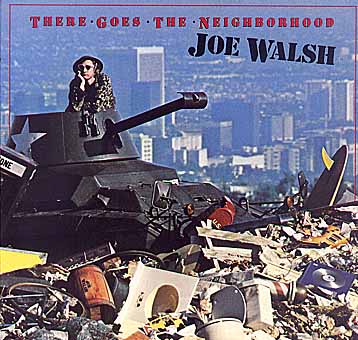
Back to my original question, “How many pop/rock songs can you name that feature the guitarron?” Although there may be several, I can only think of one – Joe Walsh’s “Life of Illusion.” While it only charted at #34 on the Hot 100, this 1981 release was a #1 record on the Mainstream Rock Charts. The song came from Walsh’s LP “There Goes the Neighborhood.”
The Guitarron in its Natural Habitat
I found this unusual but excellent video of the guitarron and the vihuela. I have no idea the name of these strange costumed musicians, but the song is excellent. The vihuela is tuned like the first five strings of a guitar; however, the A, D, and G are tuned an octave higher – much like a high strung guitar missing the low E.
Subscribe to:
Posts (Atom)
