Late post today as we were moving into our new digs. Being that it is the first Friday of the new year, our new feature for the beginning of the weekend is Friday Flipsides. Some of the flipsides we will feature were double sided hits, some actually out positioned the “A” side, and some are just really great songs.
In 1974, Paul McCartney and Wings travelled to Nashville to cut a few tunes. This session produced the single “Junior’s Farm” and its flipside “Sally G.” While “Junior’s Farm” peaked at #3, “Sally G” garnered enough airplay to place at #17 on the Hot 100 and #51 on the country charts. It was written after Paul McCartney had gone out to hear some country music in Nashville. Feeling inspired, he quickly penned our feature tune.
It is obviously very heavily influenced by country music and several well known Nashville session musicians play on this cut including Lloyd Green on peddle steel guitar and Vassar Clements and Johnny Gimble on the twin fiddles. I always preferred this side to “Junior’s Farm.”
Issued as Apple 1875, it was McCartney’s last single for The Beatles’ own record label. His follow-up single, “Walking through the Park with Eloise” under the name of The Country Hams was on the EMI label and the subsequent Wings’ single, “Listen to what the Man Said” was released by Capitol Records. For 19 years, “Sally G” was only available as the single release. It did not appear on an album until 1993.
Friday, January 7, 2011


Thursday, January 6, 2011
R.I.P. Gerry Rafferty
Yesterday, I got word that singer Gerry Rafferty had passed away from liver failure. Like many Americans, I was introduced to Rafferty and his musical partner Joe Egan with their 1972 hit as Stealers Wheel.

“Stuck in the Middle with You,” which by the way has been used for several TV commercials, was written as a parody of Bob Dylan’s style. It struck a chord with many folks and is often used when speaking of Rafferty’s career. In March 1973, the song peaked in the US at #6. While it is Joe Egan who handles the lead vocals on the song, Rafferty sings harmony and is its coauthor. I love this tune – especially the lap steel guitar.
Stealers Wheel had one other hit. “Star,” from the band’s 1973’s “Ferguslie Park” album, the album and song was released after Stealers Wheel was reduced to two people – Egan and Rafferty. It only made it to #29 in 1974, but it is a great tune nonetheless.
The accompanying video is a TV appearance with Egan and Rafferty lip syncing to the single’s audio track. It has harmonica and kazoos – for what else could a person ask.
This is one of those rare songs that I remember where I was and what I was doing when I heard it the first time. It was during the spring of 1978 and I was driving from Logan, WV to Huntington on WV Route 10 in my Chevy Vega.
The song came on WKEE-FM as I was driving through Salt Rock and as soon as I hear Raphael Ravenscroft’s alto saxophone (he also played soprano sax on the cut), I immediately pulled off the road to hear the song in its entirety.
Ravenscroft’s solo was responsible for a resurgence of the sales of saxophones and the use of the instrument in popular music. “Baker Street” was a huge hit peaking at #3 in the UK and at #2 in the US. The “City to City” LP charted at #1 on the Billboard album charts. The single was certified gold and the album platinum.
While Rafferty never received the chart success as he had with “Baker Street,” he had four other charting singles: “Right Down the Line” at #12, “Home and Dry” at #28, “Days gone Down” at #17, and “Get it right Next Time” at #21. Rest in Peace Gerry – we will miss your contributions to this world.

Stuck in the Middle with You
“Stuck in the Middle with You,” which by the way has been used for several TV commercials, was written as a parody of Bob Dylan’s style. It struck a chord with many folks and is often used when speaking of Rafferty’s career. In March 1973, the song peaked in the US at #6. While it is Joe Egan who handles the lead vocals on the song, Rafferty sings harmony and is its coauthor. I love this tune – especially the lap steel guitar.
Star
Stealers Wheel had one other hit. “Star,” from the band’s 1973’s “Ferguslie Park” album, the album and song was released after Stealers Wheel was reduced to two people – Egan and Rafferty. It only made it to #29 in 1974, but it is a great tune nonetheless.
The accompanying video is a TV appearance with Egan and Rafferty lip syncing to the single’s audio track. It has harmonica and kazoos – for what else could a person ask.
Baker Street
This is one of those rare songs that I remember where I was and what I was doing when I heard it the first time. It was during the spring of 1978 and I was driving from Logan, WV to Huntington on WV Route 10 in my Chevy Vega.
The song came on WKEE-FM as I was driving through Salt Rock and as soon as I hear Raphael Ravenscroft’s alto saxophone (he also played soprano sax on the cut), I immediately pulled off the road to hear the song in its entirety.
Ravenscroft’s solo was responsible for a resurgence of the sales of saxophones and the use of the instrument in popular music. “Baker Street” was a huge hit peaking at #3 in the UK and at #2 in the US. The “City to City” LP charted at #1 on the Billboard album charts. The single was certified gold and the album platinum.
While Rafferty never received the chart success as he had with “Baker Street,” he had four other charting singles: “Right Down the Line” at #12, “Home and Dry” at #28, “Days gone Down” at #17, and “Get it right Next Time” at #21. Rest in Peace Gerry – we will miss your contributions to this world.
Wednesday, January 5, 2011
Redeye: Games
It’s my first One Hit Wonders Wednesday. Just in case someone questions why some songs are included, I’ll provide my motivation. I define a “One Hit Wonder” as an artist’s only song to chart within the Top 40. Bands and singers even will qualify if they had a dozen singles charting above (or is below) 40 (i.e. 41-100), but only one song charting between 1 and 40.
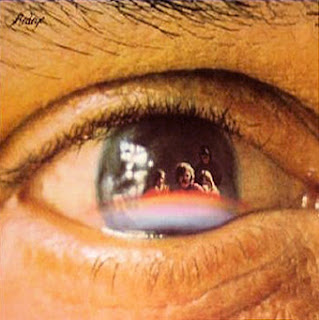
Now that we’ve got the preliminaries out of the way, one of my favorite one hit wonders is by the Los Angeles based band Redeye. Their only Top 40 single “Games” peaked the day after Christmas 1970 at #27. “Games” was released on Redeye’s self titled debut album. I bought this album in 72 as a cutout at Woolworths in Eastland Shopping Center and still have it in my collection.
Another nice thing about this recording is the clean stereo mix – great separation - the drums sound just perfect in the right channel with the acoustic rhythm guitar keeping time in the left. There is a little bit of everything in this tune: a driving bass, cowbell, several different lead guitar sounds (including authentic fuzz tone distortion), ratchet, and a great ending. I hope I’m not the only one that remembers this great tune from 1970.
Now that we’ve got the preliminaries out of the way, one of my favorite one hit wonders is by the Los Angeles based band Redeye. Their only Top 40 single “Games” peaked the day after Christmas 1970 at #27. “Games” was released on Redeye’s self titled debut album. I bought this album in 72 as a cutout at Woolworths in Eastland Shopping Center and still have it in my collection.

Another nice thing about this recording is the clean stereo mix – great separation - the drums sound just perfect in the right channel with the acoustic rhythm guitar keeping time in the left. There is a little bit of everything in this tune: a driving bass, cowbell, several different lead guitar sounds (including authentic fuzz tone distortion), ratchet, and a great ending. I hope I’m not the only one that remembers this great tune from 1970.
Tuesday, January 4, 2011
The DePue Brothers Band: Mexico
While on my way to Wal-Mart on Sunday, I was tuned into Mountain Stage (from the Mountain State of West Virginia) on West Virginia Public Radio. I heard for the first time the DePue Brothers Band. Fronted by four brothers from Bowling Green, Ohio who are classical violin virtuosos, the band mixes their classical training with other musical styles.
While I didn’t hear “Mexico” on the show (which they may have performed), it reminds me of the David Grisman Quartet turned up to eleven on a scale of one to ten. Can they pull off this sound live as they can in the studio, you bet they can. Don’t let the production fool you, their wizardry on the strings is every bit as real – live or Memorex. The recording is from their album “Weapons of Grass Construction.”
Principle violinist Alex DePue who has been playing his instrument since age five, won a major violin competition at the age of ten. He also showed an early interest in fiddle music and was the Michigan State Fiddling Champion from 1994 to 1998.
He is joined by his siblings Wallace, Jason, and Zachary – all accomplished musicians in their own right. Dr. Wallace DePue is the assistant concertmaster for the Philly Pops. Brother Jason DePue is a member of the first violin section of the Philadelphia Orchestra. Zachary is currently concertmaster of the Indianapolis Symphony Orchestra.
Others in the band include drummer Don Liuzzi who is the principal timpanist with the Philadelphia Symphony Orchestra. Session musician and US National Flatpicking Guitar Champ Mark Cosgrove provides six-string accompaniment. Classical and jazz bassist Kevin MacConnell holds down the low end. I am not sure who plays banjo on this song as both band member Mike Munford and guest musician Tony Trischka are credited with playing on the CD.
Definitely a treat to hear and hopefully some more songs will become available on You Tube.
Monday, January 3, 2011
Mac McAnally: Little Martha
One of the greatest little instrumentals of all time is found on the Allman Brothers’ LP “Eat A Peach.” Recorded just weeks before Duane Allman’s death in October 1971, “Little Martha” is just over two minutes in length and is what Leo Kottke has referred to as “possibly the most perfect guitar song ever written.”
Mac McAnally explains why he had difficulty learning this tune that was recorded in open E tuning (EBEG#BE) as he appeared on the Bob and Tom syndicated radio show.
The guitar Mac is playing is a Resolectric from the National Resophonic Guitar Company. According to National website, the guitar’s specs are as follows:

It’s a great sounding guitar that beats the original National Resophonics of the 50s and 60s to pieces. I know as I have one. Mine is from 1958 and I bought it during the summer of 1976 at B&B Loans in Charleston, WV for $85. I love my Resophonic, but alas it not electric and has only 12 frets to the body.

Played by Duane Allman and Dicky Betts, the title “Little Martha” was inspired by a grave at the Rose Hill Cemetery in Macon, GA. It is the same cemetery that provided the inspiration for the Dicky Betts’ tune “In Memory of Elizabeth Reed” and the same cemetery where Duane Allman and Berry Oakley would be laid to rest.

Little Martha Ellis was one month shy of her 13th birthday when she died in 1836. A full sized statue of the little girl whose name would be immortalized a century and a half later stands watch over her final resting place in Macon.

It appears that the original pedestal for the statue was replaced at some time in the recent past. For more on her grave site, see her Find A Grave memorial.
Mac McAnally explains why he had difficulty learning this tune that was recorded in open E tuning (EBEG#BE) as he appeared on the Bob and Tom syndicated radio show.
The guitar Mac is playing is a Resolectric from the National Resophonic Guitar Company. According to National website, the guitar’s specs are as follows:
The current model uses an audiophile-quality Highlander preamp to mix both the magnetic and piezoelectric pickups. A Jason Lollar P-90 pickup sits in the neck position, and a Highlander piezo transducer is fitted under the saddle. The output of each pickup is controlled by independent volume knobs, with a master volume knob to control the instrument's overall output level. A 3-way toggle switch selects which pickups are active. The solid mahogany body is capped with a figured maple top bound in ivoroid. The figured maple neck clears 14 frets to the body, highlighted with a diamond inlaid, rosewood fretboard.

It’s a great sounding guitar that beats the original National Resophonics of the 50s and 60s to pieces. I know as I have one. Mine is from 1958 and I bought it during the summer of 1976 at B&B Loans in Charleston, WV for $85. I love my Resophonic, but alas it not electric and has only 12 frets to the body.

Allman Brothers’ Original
Played by Duane Allman and Dicky Betts, the title “Little Martha” was inspired by a grave at the Rose Hill Cemetery in Macon, GA. It is the same cemetery that provided the inspiration for the Dicky Betts’ tune “In Memory of Elizabeth Reed” and the same cemetery where Duane Allman and Berry Oakley would be laid to rest.
Little Martha Ellis was one month shy of her 13th birthday when she died in 1836. A full sized statue of the little girl whose name would be immortalized a century and a half later stands watch over her final resting place in Macon.
It appears that the original pedestal for the statue was replaced at some time in the recent past. For more on her grave site, see her Find A Grave memorial.
Sunday, January 2, 2011
Joan Baez: God is God
For today’s Spiritual Sunday selection comes from the last album released by Joan Baez – “Day After Tomorrow.” Steve Earle wrote “God is God” for Baez and sings harmony on this cut from 2008. The refrain changes after each verse and is very profound indeed.
Following verse one, she sings “Yeah, I believe in God, and God ain't me.” Ending verse two is the line “And I believe in God, and God ain't us.” The song ends with the title line “But I believe in God, and God is God.”
Following verse one, she sings “Yeah, I believe in God, and God ain't me.” Ending verse two is the line “And I believe in God, and God ain't us.” The song ends with the title line “But I believe in God, and God is God.”
Saturday, January 1, 2011
Head East: Never Been Any Reason
Happy New Year! It is the first day of the year and I am beginning a new Saturday feature that looks at songs that bubbled under the Top 40 charts. This includes non-single album cuts that were popular but never charted outside of Album Oriented Rock radio.
The first song in this series of features comes from Head East, an Illinois band that never gained the popularity that they were due. In 1974, they recorded their first album “Flat as a Pancake” on their own Pyramid Records label. This limited release LP grew in popularity in the Midwest and garnered the attention of the A & R (artist and repertoire) department at A & M Records. The label picked up the band and re-released the album in its entirety in 1975.

The first single from their debut album was “Never Been Any Reason,” a song that had been popular on Midwestern radio a year earlier. I remember Bob Lee playing this one quite often during his evening album music shows on Ashland, KY's WAMX. The single only charted 68 on the Hot 100 probably because it had already had its run of popularity in the band’s primary region. The album peaked at #126 on the Billboard Album Charts and was certified as a gold album.
What a great tune, Roger Boyd’s keyboards provide some of the shining moments of this song. It has tasty monophonic synthesizer runs that pan from left to right and are double tracked in stereo in places. The portamento feature on the synth is executed beautifully and the Hammond organ is the glue that holds it all together.
It is also a unique song that it has dual lead vocals with the first two lines of the verse sung by drummer Steve Huston followed by lead vocalist John Schlitt with the two providing harmony on the chorus and the first part of the verses’ fourth line. It has tasty bass licks, guitar harmonics, and of course cowbell.
In 1979, the song was also released on “Head East Live!” If there was any reason that some would have thought that the keyboard antics couldn’t be reproduced live, this recording dispels that theory. While not every lick that Roger Boyd played could be replicated due to overdubs, guitarist (and the song’s author) Mike Somerville picks up any slack that may have occurred live by providing the counterpoint.

As with the synth that Roger Boyd used on the studio version, he has an axe that uses two oscillators that are tuned an octave a part with one slightly detuned giving the keyboards an extremely fat sound. Shortly after the release of this LP, vocalist John Schlitt left the band. He would later return to the music scene in the 1980s as the lead vocalist for the Christian rock band Petra.
The first song in this series of features comes from Head East, an Illinois band that never gained the popularity that they were due. In 1974, they recorded their first album “Flat as a Pancake” on their own Pyramid Records label. This limited release LP grew in popularity in the Midwest and garnered the attention of the A & R (artist and repertoire) department at A & M Records. The label picked up the band and re-released the album in its entirety in 1975.

The first single from their debut album was “Never Been Any Reason,” a song that had been popular on Midwestern radio a year earlier. I remember Bob Lee playing this one quite often during his evening album music shows on Ashland, KY's WAMX. The single only charted 68 on the Hot 100 probably because it had already had its run of popularity in the band’s primary region. The album peaked at #126 on the Billboard Album Charts and was certified as a gold album.
Studio Version
What a great tune, Roger Boyd’s keyboards provide some of the shining moments of this song. It has tasty monophonic synthesizer runs that pan from left to right and are double tracked in stereo in places. The portamento feature on the synth is executed beautifully and the Hammond organ is the glue that holds it all together.
It is also a unique song that it has dual lead vocals with the first two lines of the verse sung by drummer Steve Huston followed by lead vocalist John Schlitt with the two providing harmony on the chorus and the first part of the verses’ fourth line. It has tasty bass licks, guitar harmonics, and of course cowbell.
Live Version
In 1979, the song was also released on “Head East Live!” If there was any reason that some would have thought that the keyboard antics couldn’t be reproduced live, this recording dispels that theory. While not every lick that Roger Boyd played could be replicated due to overdubs, guitarist (and the song’s author) Mike Somerville picks up any slack that may have occurred live by providing the counterpoint.

As with the synth that Roger Boyd used on the studio version, he has an axe that uses two oscillators that are tuned an octave a part with one slightly detuned giving the keyboards an extremely fat sound. Shortly after the release of this LP, vocalist John Schlitt left the band. He would later return to the music scene in the 1980s as the lead vocalist for the Christian rock band Petra.
Subscribe to:
Posts (Atom)
